Veja as ofertas da Adidas

Veja mais um site para comprar pela Internet! Conheça os produtos para esportes no Site da
Adidas – Clique aqui e confira na Loja !
.
ultramaratonas
.
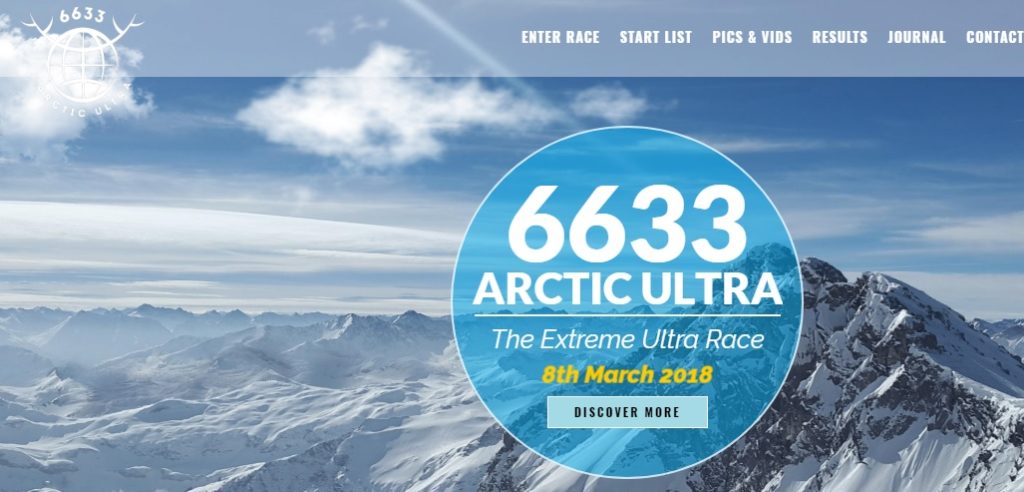
The 120 mile race finishes at the First Nations Hamlet of Fort McPherson, whilst the longer 380 mile race continues to the banks of the Arctic Ocean at Tuktoyaktuk.
The race starts at Eagle Plains Hotel which is approximately 225 miles from the Dawson junction on the Klondike Highway. It is a solitary hotel and fuel stop and is the only oasis for a meal, bed and gas until you reach the First Nations Hamlet of Fort McPherson. You will receive a very warm welcome here from both the Owner and staff and you will hopefully also get a good night’s sleep the night before the start.
The start line is directly outside the hotel amid stunning scenery with the beautiful Richardson Mountains to your right.
0KM
On starting the race, you immediately descend gently through Arctic stunted forest for about 10km to the bridge at Eagle River. On crossing the bridge, the road bears right and ascends quite steeply at first and then less so for about 10km, whereupon the landscape becomes more exposed to the notorious winds, but if climatic conditions allow will afford you some of the most stunning scenery you will see anywhere in the World. At 20km the Dempster doubles as an emergency airstrip which is seldom used, but please be aware that aircraft DO occasionally use this facility. This hilly landscape from here continues until the first checkpoint at the Arctic Circle at 712m above sea level. Weather permitting, you will have the most awesome views of the most stunning, remote and inhospitable landscape our planet has to offer.
From the Arctic Circle, the route continues to rise and fall and is best described as undulating (although many veteran athletes of this event will suggest that mountainous is a more appropriate description). Approaching Glacier Creek it’s a little exposed with possible cross winds. It remains quite open past 50km with long open flat stretches.
This whole stretch is affectionately known as Hurricane Alley, and with good reason. The potential is there for EXTREMELY strong Katabatic winds. Lorries using the Dempster are regularly blown over and any human caught in these winds could quite literally be forced to crawl. When the winds are blowing (see video clip on the gallery page of a day when it was open and you will then appreciate the severity of what is being described), the road is usually closed to vehicles.
64.2KM
At 64.2km there is a significant and very noticeable “Big Dipper” in the trail which is sign posted as Sheep Creek. At 77km there is a Highways open shelter on your right which you are free to shelter in if necessary, but a little further on your left (300 metres) is Rock River Campground – for 2016 subject to the camp ground being ploughed we will have a staging post here where athletes can at the very least get minimal respite from the wind and cold. This is NOT an official checkpoint and therefore no water will be provided.
83KM
At 83km the route once again becomes exposed to possible severe winds and is a likely to be the toughest part of the race all the way through to the steep ascent to Wright Pass at 92km. At the top of the Pass is the border with the North West Territories and you are reminded to put your watches FORWARD one hour! The second checkpoint is approx 14km further on at the Highways Depot at James Creek.
120KM
On leaving James Creek, at 120km you will pass through a most stunning gorge where the frozen river is a beautiful ice blue. It really is fantastic to see, although in 2013 there was for the first time in this race a small section of overflow so be aware. The route then descends towards Midway Lake, where there is likely to be sections of spindrift across the route.
149KM
At 149km there is another emergency airstrip on the trail, although highly unlikely to be in use.
180KM
At about 160km you will catch the first sight of the McKenzie Delta below you and from this point onwards the trail descends to the Peel River ice crossing at 174km. This is another very pretty part of the route. On crossing the Ice Bridge, the route changes to relatively flat for the last 10km into Fort McPherson and the finish line of the 120 Miler or Checkpoint 4 if you are racing all the way to Tuktoyaktuk.
Fort McPherson is a small First Nation community and subject to confirmation we will be once again using the School Hall within the Hamlet.
On leaving Fort McPherson, the racers will now be racing on a brand new route to the finish line at Tuktoyaktuk. From this first nations hamlet, the athletes will proceed out onto a small private Ice Road that meanders its way for the next 100 miles (approx.) to Aklavik. This area of the Northwest Territories is very remote, but the proximity of the wooded banks along the route should provide some much appreciated protection from the winds. Roughly halfway along this section will be another checkpoint.
340KM
From Aklavik, the route will again continue with solid ice underfoot, albeit a wider and more exposed section of Ice Road. With this section of the race being approx. 75 miles, this will be a non-stop section all the way to Inuvik (to replicate the “popular” section to Swimming Point from previous years). Once arriving in Inuvik, the athletes will benefit from a comfortable checkpoint at Arctic Chalets where showers, warm rooms, beds and cooking facilities are available.
460KM
The final stretch of the race is approx. 100 miles long and will be from Inuvik to the finish line at Tuktoyaktuk over the newly opened (November 2017) overland permanent road. Similar to the first 120 miles of the race, this road is a hard packed “forest” type trail that winds its way through the myriad of lakes strewn over the McKenzie Delta. Where any tree cover exists, they will be stunted by the cold and will offer little protection from the winds that can affect the area. A midway checkpoint will be provided, albeit it will merely comprise a sheltered trailer for a short period of recovery before you blast your way to the finish line. It is the most remote, barren, yet stunningly beautiful place we have ever had the fortune to visit, it is purely magical, and will make the memories of this race ones which will stay with you all your lives.
Although you will be arriving in Tuktoyaktuk via a new route, the finish line will once again be on the banks of the Arctic Ocean.
Read More in: https://www.6633ultra.com/





Running Through the Wall: Personal Encounters with the Ultramarathon

READ MORE IN : Running Through the Wall: Personal Encounters with the Ultramarathon


Jason Robillard has been doing ultramarathons for many years, and started advocating for barefoot running before it was cool and is considered an authority on it.
In this guide, he teaches trail-running newbies and experienced marathoners essential survival skills and tips for running long distances: how to run in snow, ice, and mud; how to cross large streams of water; what to do when you have to go number 2 on mile 30 of a 50-mile run; preparing for trouble (building a fire, surviving in the heat and cold); running in thunderstorms.
The book is written with an irreverent sense of humor and touches on topics that many running books don’t get into.
Skyhorse Publishing, as well as our Sports Publishing imprint, is proud to publish a broad range of books for readers interested in sports—books about baseball, pro football, college football, pro and college basketball, hockey, or soccer, we have a book about your sport or your team.
The Ultramarathon Guide: A Simple Approach To Running Your First Ultramarathon

Whether you are already an ultramarathon runner, or someone who is about to embark on the challenge, The Ultramarathon Guide: A Simple Approach To Running Your First Ultramarathon, is a book that can help you realize your dreams.
Inside these pages, you will discover all you need to know about taking the first steps in this grueling challenge, as well as:
• How this experience will change your life
• An EASY to follow training program
• How you can SHATTER your expectations
• Changing your running mentality FOREVER
• And much more…
Becoming an ultrarunner is a simpler process than you may think. By keeping things simple and focusing on both the physical and mental side of the challenge, helps you to understand that running any distance is within your capabilities.
READ MORE IN: The Ultramarathon Guide: A Simple Approach To Running Your First Ultramarathon
Resultados 2018
Masculino
1) Solonei da Silva (BRA), 2h15min55seg
2) Wellington Bezerra da Silva (BRA), 2h16min06seg
3) Goodfrey Kosgei (QUE), 2h16min38seg
4) Philip Kiplimo (UGA), 2h16min50seg
5) Paulo Kimutai (QUE), 2h17min18seg
Feminino
1) Andréia Hessel (BRA), 2h40min07seg
2) Shewaye Woldemeskel (ETH), 2h41min37seg
3) Valdilene Silva (BRA), 2h42min38seg
4) Adriana Aparecida da Silva (BRA), 2h42min55seg
5) Carmen Aguilera (PAR), 2h48min03seg
Melhores tempos
Ao longo de sua história, a prova conseguiu tempos bastante expressivos, com destaque para o feito do brasileiro Vanderlei Cordeiro de Lima (BRA), que estabeleceu o recorde em 2002, com 2h11min19seg, e a queniana, Rumokol Chepkanan, com 2h31min31seg, em 2012. Também conseguiram tempos expressivos no masculino os quenianos Stanley Biwot, com 2h11min21seg, em 2010, e David Kemboi (QUE), com 2h11min53, em 2011. No feminino ainda se destacaram a queniana Carolyne Komen, com 2h35min51seg, em 2015, e marroquina Samira Raif, com 2h36min01, em 2011.
Todos os campeões da Maratona de São Paulo (Masculino / Feminino)
2018 – Solonei da Silva (BRA)m 2h15min55s/Andréia Hessel (BRA), 2h40min07s
2017 – Paul Kimutai (QUE), 2h17min56s/ Leah Jerotich (QUE), 2h41min58s
2016 – Paul Kimutai (QUE), 2h17min14seg/Alice Kibor (QUE), 2h35min56seg
2015 – Asbel Kipsang (QUE), 2h15min15s/Carolyne Komen (QUE),2h35min51s
2014 – Paul Kangogo (QUE), 2h14min16s/Rumokol Chepkanan (QUE), 2h42min27s
2013 – Stanlei Koech (QUE), 2h16min07/Samira Raif (MAR), 2h38min23s
2012 – Solonei da Silva (BRA),2h12min25s/Rumokol Chepkanan (QUE),2h31min31s*
2011 – David Kemboi (QUE), 2h11min53s/ Samira Raif (MAR), 2h36min01
2010 – Stanley Biwott (QUE), 2h11min21s/Marizete Moreira (BRA), 2h39min26s
2009 – Elias Chelimo (QUE), 2h13m59s/ Marizete Moreira (BRA), 2h42m24s
2008 – Claudir Rodrigues (BRA), 2h17m07s/Mª Zeferina Baldaia (BRA), 2h42m20s
2007 – Reuben Chepkwek (QUE), 2h16m05s/ Jacqueline Chebor (QUE), 2h40m12s
2006 – Rotich Solomon (QUE), 2h15m15s/ Margaret Karie (QUE), 2h39m24s
2005 – José Teles (BRA), 2h19m47s/ Márcia Narloch (BRA), 2h40m39s
2004 – Franck Caldeira (BRA), 2h17m30s/ Margareth Karie (QUE), 2h40m10s
2003 – Genilson da Silva (BRA), 2h16m26s/Mª do Carmo Arruda (BRA), 2h39m12s
2002 – Vanderlei de Lima (BRA), 2h11m19s*/ Mª Zeferina Baldaia (BRA), 2h36m07s
2001 – Stephen Rugut (QUE),2h14m30s/ Marizete Rezende (BRA), 2h38m57s
2000 – David Ngetich (QUE), 2h15m21s/ Márcia Narloch (BRA), 2h40m15s
1999 – Paul Yego (QUE), 2h15m29s/Márcia Narloch (BRA), 2h37m20s
1998 – Diamantino dos Santos(BRA), 2h16m55s/ Viviany Oliveira (BRA), 2h39m58s
1997 – Kipkemboi Cheruiyot (QUE), 2h17m07s/ Viviany Oliveira (BRA), 2h42m13s
1996 – Chalam El Maali (MAR), 2h15m21s/ Janete Mayal (BRA), 2h41m40s
1995 – Luiz A. dos Santos (BRA), 2h17m11s/Ilyna Nadezhda (RUS), 2h49m33s
Leia mais no:http://www.yescom.com.br/2019/maratonadesaopaulo/noticias-e-historias/304/maratona-internacional-de-sao-paulo-2019-abre-inscricoes
ou no http://www.yescom.com.br/2019/maratonadesaopaulo/
.