A.S.D. TRANSEO dans la personne de son président Pasquale Brandi, avec le parrainage de IUTA – Association Italienne d’Ultramaratona et Trail, organise la 7° édition de la
6 Jours UMF – ITALIAN ULTRAMARATHON FESTIVAL , course à pied sportive respectivement composée par 7 disciplines sur la distance de Marathon, 100 Mille, 100 K, 6 – 24 – 48 Heures et de 6 Jours.
Aussi les Marcheurs seront acceptés, avec un classement spécifique.
La compétition FIDAL avec la BRONZE LABEL IAU.
La 6 JOURS ( aussi les Marcheurs ) partira le 10 SEPTEMBRE à 15h00 et terminera le 16 SEPTEMBRE à 15h00 .
La 48 HEURES et la 100 MILLE partiront le 14 SEPTEMBRE à 15h00 et termineront le 16 SEPTEMBRE à 15h00
La 24 HEURES et la 100 K partiront le 15 SEPTEMBRE à 15h00 et termineront le 16 SEPTEMBRE à 15h00
Les départs des 6 HEURES et des MARATHONS sont libres c’est-à-dire que, entre 01.00 et 23.00 ( du 10 au 16 Septembre ), on peut décider de partir toutes les deux heures (par exemple à 15h00, 17h00, 19h00 etc.)
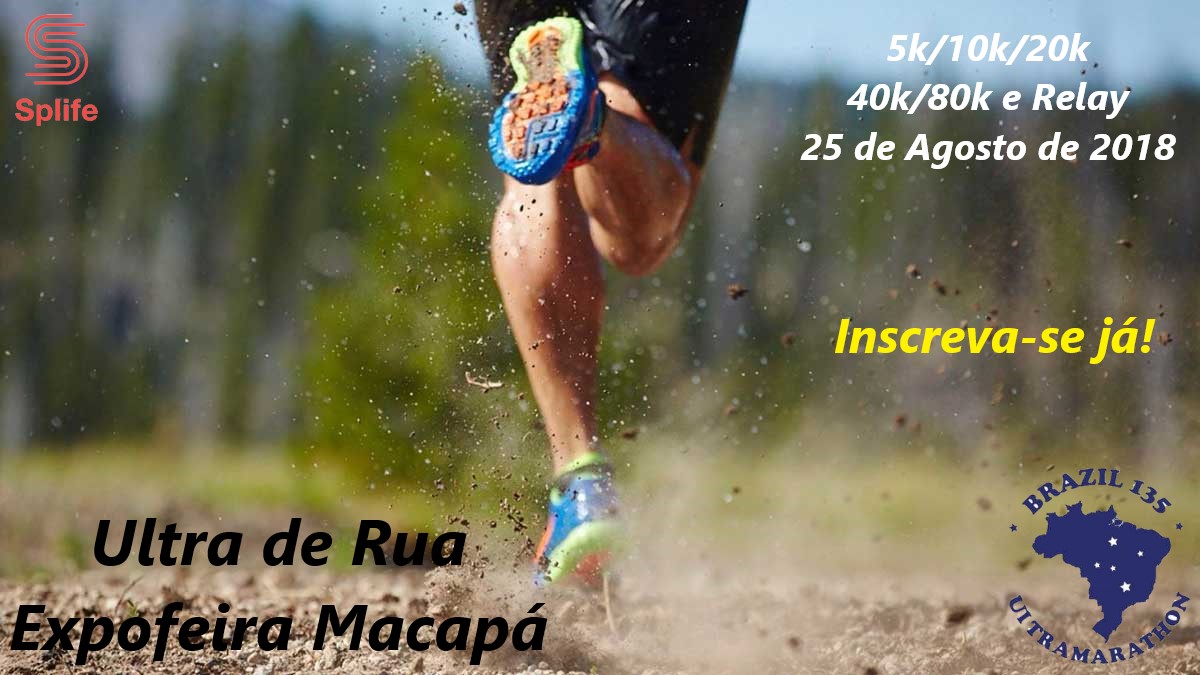
As provas que compõem o evento ULTRAMARATONA DE RUA BRAZIL 135 – EXPOFEIRA MACAPÁ serão realizadas no dia 25 de Agosto de 2018, na cidade de Macapá, com qualquer condição climática, tendo a participação de atletas regularmente inscritos de ambos os sexos, ficando sua largadas acontecendo da seguinte forma:
Largada: Parque de Exposição Agropecuária Expofeira – Rod Juscelino Kubitschek, Distrito de Fazendinha, Macapá, AP, às 7h00
SOLO e RELAY CORPORATIVO (Revezamento), são as únicas categorias existentes na Ultramaratona de Rua BR135.
Não haverá distinção entre categorias de atletas por sexo ou faixa etária.
Cadeirantes, Cegos, Amputados e quaiser ouras classificações existentes de atletas, não definidas aqui, participantes da Ultramaratona de Rua Brazil 135, são considerados ultramaratonistas.
TODOS os ultramaratonistas serão tratados igualmente.
Não haverá nenhum tipo de Pontos de Apoio ao longo do percurso.
O apoio aos atletas será dado somente no Ponto de Concentração da Prova (PC)
O atleta deve estar preparado para ser AUTO SUFICIENTE ao longo do percurso.
Não haverá entrega de Troféus e nenhuma outra forma de premiação diferentes daquelas contantes do item 9 do regulamento.
Solo 5K
Solo 10K
Solo 20K
Solo 40K
Solo 80K – PROVA CLASSIFICATÓRIA PARA A BR135
Relay Corporativo 20 – 4 atletas (1 volta de 5K por atleta )
Relay Corporativo 40 – 4 atletas (2 voltas de 5K por atleta)
Relay Corporativo 80 – 4 atletas (4 voltas de 5K por atleta)
A prova está com inscrição aberta nos seguintes sites:
Synthetic
Imported
Rubber sole
Shaft measures approximately low-top from arch
Rear foot GEL Cushioning System: Attenuates shock during impact phase and allows for a smooth transition to midstance.
Removable Sockliner: A sockliner which can be removed to accommodate a medical orthotic.
Removable Sockliner: A sockliner which can be removed to accommodate a medical orthotic.
Trail Specific Outsole: Reversed lugs provide uphill and downhill traction on all types of terrain.
AHAR Outsole: Acronym for ASICS High Abrasion Rubber. Placed in critical areas of the outsole for exceptional durability.
Why do so many runners who start an ultramarathon not finish? How can you give yourself the best chance of finishing a 50 or 100 mile race? Do you really need to run 50-100 mile weeks to finish an ultramarathon? The Minimalist’s Guide to Running an Ultramarathon answers these questions and gives you the blueprint you need to finish your ultramarathon. It dispels the myth that you need to run lots of miles to finish an ultramarathon. Understanding that every runner has different abilities and goals, this book does not provide a “one size fits all” training program. It gives you key principles and guidelines that will allow you to create the best training program that meets your needs. Regardless of whether you are a seasoned ultrarunner looking for more tools to improve your performance or are new to the sport and want to know the minimum amount of training needed to finish an ultramarathon, this book will give you the framework for the optimal training program. It follows the 80/20 principle and focuses on the most efficient training program to minimize your training time while providing maximum benefit. The optimal training program for running an ultramarathon includes much more than just running.
A prova Pedestre 22ª MEIA MARATONA INTERNACIONAL DO RIO DE JANEIRO, doravante denominada EVENTO, será realizada no dia 19 de Agosto de 2018 na cidade do Rio de janeiro, com distancias de 21.097m e 5.000m, por PESSOAS DE AMBOS OS SEXOS devidamente inscritas, doravante denominadas ATLETAS, independente da condição climática.
Deste evento fazem parte:
a. CORRIDA INDIVIDUAL, com medida oficial de 21.097m, doravante denominada MEIA MARATONA.
b. A CORRIDA INDIVIDUAL, com medida aproximada entre 4.500m e 5.000m, doravante denominada CORRIDA 5K.
1.2 A LARGADA da MEIA MARATONA será na Praia de São Conrado – Av. Prefeito Mendes de Morais e a CHEGADA na Praça Cuauhtemoc – Aterro do Flamengo , conforme percurso detalhado divulgado no site do EVENTO.
1.3. A LARGADA da CORRIDA 5K será no Aterro do Flamengo (Praça Arquiteto Laércio Sampaio, em frente as quadras de society) e a CHEGADA no Aterro do Flamengo (mesmo local da Meia Maratona), conforme percurso detalhado divulgado no site do EVENTO.
1.4. Os ATLETAS farão a LARGADA, em pelotões específicos distintos entre si, nos seguintes horários abaixo:
a. Para a MEIA MARATONA,
• CATEGORIA ATLETA CADEIRANTE
LARGADA a partir das 08h15min em pelotão único.
• CATEGORIA ELITE FEMININO
LARGADA a partir das 08h00min em pelotão único.
• CATEGORIA ELITE MASCULINO
LARGADA a partir das 08h30min em pelotão único.
• CATEGORIA PELOTÃO PREMIUM
LARGADA a partir das 08h30min em pelotão único.
• CATEGORIA ATLETA COM DEFICIÊNCIA
DEV = Deficiente Visual / AMP = Amputado de Membro(s) Inferior(es) / DMAI = Deficiente Andante Membro(s) Inferior(es) / DI = Deficiente Intelectual / DMS = Deficiente Membro(s) Superior(es) / DAU = Deficiente Auditivo
LARGADA a partir das 08h30min em pelotão único.
• CATEGORIA PELOTÃO GERAL
LARGADA a partir das 08h30min em pelotão único.
b. Para a CORRIDA 5K,
• CATEGORIA PELOTÃO GERAL
LARGADA a partir das 07h00min em pelotão único.
• CATEGORIA ATLETA COM DEFICIÊNCIA
CCG = Cadeirante com Guia / DEV = Deficiente Visual / AMP = Amputado de Membro(s) Inferior(es) / DMAI = Deficiente Andante Membro(s) Inferior(es) / DI = Deficiente Intelectual / DMS = Deficiente Membro(s) Superior(es) / DAU = Deficiente Auditivo
LARGADA a partir das 07h00min em pelotão único.
This revolutionary training method has been embraced by elite runners—with extraordinary results—and now you can do it, too.
Respected running and fitness expert Matt Fitzgerald explains how the 80/20 running program—in which you do 80 percent of runs at a lower intensity and just 20 percent at a higher intensity—is the best change runners of all abilities can make to improve their performance. With a thorough examination of the science and research behind this training method, 80/20 Running is a hands-on guide for runners of all levels with training programs for 5K, 10K, half-marathon, and marathon distances.
In 80/20 Running, you’ll discover how to transform your workouts to avoid burnout.
Runs will become more pleasant and less draining
You’ll carry less fatigue from one run to the next
Your performance will improve in the few high-intensity runs
Your fitness levels will reach new heights
Ultra de Rua Parque Altamiro de Moura Pacheco – 13 de outubro de 2018
As provas que compõem o evento ULTRAMARATONA DE RUA – BR135 PARQUE ESTADUAL ALTAMIRO DE MOURA PACHECO serão realizadas no dia 13 de Outubro de 2018, na cidade de Goianópolis, com qualquer condição climática, tendo a participação de atletas regularmente inscritos de ambos os sexos, ficando sua largadas acontecendo da seguinte forma:
Largada: Parque Estadual Altamiro de Moura Pacheco Endereço: BR 060/153, Km 127, S/n, Zona Rural – Goianápolis – GO, às 7h00
SOLO e RELAY CORPORATIVO (Revezamento), são as únicas categorias existentes na Ultramaratona de Rua BR135.
Não haverá distinção entre categorias de atletas por sexo ou faixa etária.
Cadeirantes, Cegos, Amputados e quaiser ouras classificações existentes de atletas, não definidas aqui, participantes da Ultramaratona de Rua Brazil 135, são considerados ultramaratonistas.
TODOS os ultramaratonistas serão tratados igualmente.
Não haverá nenhum tipo de Pontos de Apoio ao longo do percurso.
O apoio aos atletas será dado somente no Ponto de Concentração da Prova (PC)
O atleta deve estar preparado para ser AUTO SUFICIENTE ao longo do percurso.
Não haverá entrega de Troféus e nenhuma outra forma de premiação diferentes daquelas contantes do item 9 do regulamento.
Solo 5K
Solo 10K
Solo 20K
Solo 40K
Solo 80K – PROVA CLASSIFICATÓRIA PARA A BR135
Relay Corporativo 20 – 4 atletas (1 volta de 5K por atleta )
Relay Corporativo 40 – 4 atletas (2 voltas de 5K por atleta)
Relay Corporativo 80 – 4 atletas (4 voltas de 5K por atleta)
A prova está com inscrição aberta nos seguintes sites:
When elite ultrarunners have a need for speed, they turn to coach Jason Koop. Now the sport’s leading coach makes his highly effective ultramarathon training methods available to ultrarunners of all abilities in his book Training Essentials for Ultrarunning.
Ultramarathoners have traditionally piled on the miles or tried an approach that worked for a friend. Yet ultramarathons are not just longer marathons; simply running more will not prepare you for the race experience you want. Ultramarathon requires a new and specific approach to training. Training Essentials for Ultrarunning will revolutionize training for those who want to race an ultramarathon instead of just gutting it out to the finish line.